← A Level Economics Revision · All LRAS shift right (long-run growth) questions · Home
A-Level Economics · LRAS shift right (long-run growth) diagram question
EVALUATION: why is supply-side policy said to have NO TRADE-OFF — the closest economics comes to a free lunch?
The diagram
The answer
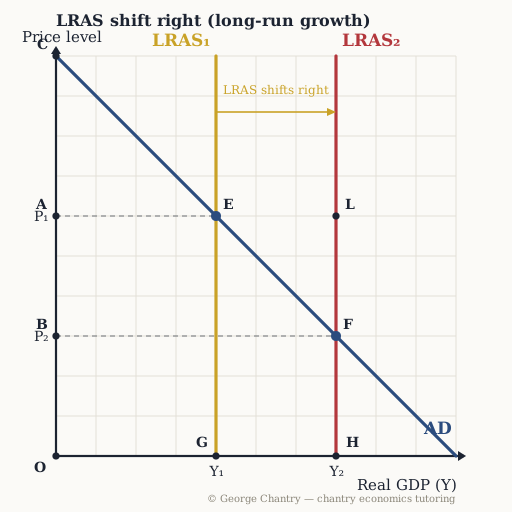
Growth rises, unemployment falls, inflation falls and the trade position improves — all at once. Demand-side policy forces a choice — stimulate and risk inflation, cool inflation and risk unemployment. Shift LRAS right and all four objectives improve together. Demand-side policy always forces a trade-off: stimulate the economy and you risk inflation; cool inflation and you risk unemployment. Supply-side policy has no such trade-off — on this diagram output rises to Y₂, unemployment falls through the greater derived demand for labour, cost-push inflation falls to P₂, and cheaper exports improve the trade position. Four objectives, one shift. The honest counter is the EVALUATION: time lags, opportunity cost, and no guarantee the shift actually happens.
Test yourself properly
This is one of 5 questions on the lras shift right (long-run growth) diagram — every corner lettered, every wrong answer diagnosed.
▶ Play the lras shift right (long-run growth) game All questions & answers

George Chantry
Professional A-Level Economics tutor · Oxford PPE First, 3 prizes in economics · 7,000+ hours one-to-one