← A Level Economics Revision · All Kinked demand (oligopoly) questions · Home
A-Level Economics · Kinked demand (oligopoly) diagram question
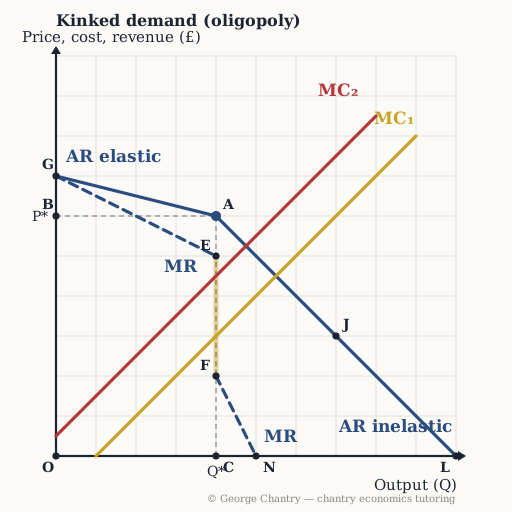
MC₁ rises to MC₂ — the firm's costs go up. What happens to the price?
The diagram
The answer
Nothing — both MC curves pass through the MR gap, so the profit-maximising output stays at Q* and the price stays at P*. Costs moved and the price did not. Within the gap there is no output at which MR and MC cross differently — so Q* and P* are unchanged. That is price rigidity. Notice there is deliberately no marked MC = MR point on this diagram. MC can sit anywhere inside the gap E to F and the profit-maximising output is still Q*, so the price is still P*. Costs rise, price sticks — the model's whole payoff, and the reason prices in oligopoly can be stable for years.
Test yourself properly
This is one of 6 questions on the kinked demand (oligopoly) diagram — every corner lettered, every wrong answer diagnosed.
▶ Play the kinked demand (oligopoly) game All questions & answers

George Chantry
Professional A-Level Economics tutor · Oxford PPE First, 3 prizes in economics · 7,000+ hours one-to-one