← A Level Economics Revision · All Keynesian LRAS (spare capacity) questions · Home
A-Level Economics · Keynesian LRAS (spare capacity) diagram question
EVALUATION: what exactly do Keynesians and Classicals DISAGREE about?
The diagram
The answer
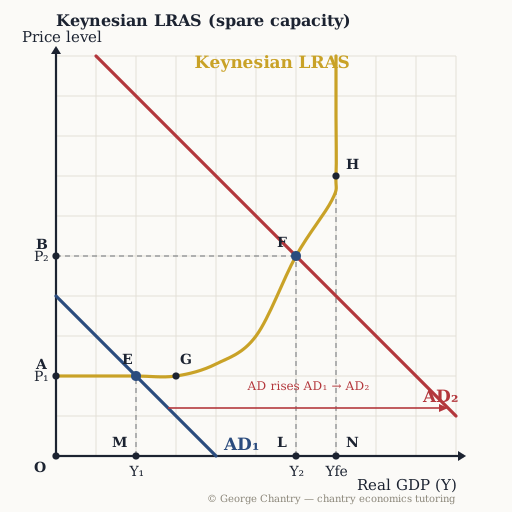
Whether wages fall in a recession — Classicals say they adjust so the economy self-heals; Keynesians say they are sticky downwards, so the economy stays stuck below full employment. Sticky wages are the whole argument. If wages fall, SRAS shifts right and the economy heals itself; if they don't, it sits in recession and needs demand-side help. Classicals: a negative output gap pushes wages down, costs fall, SRAS shifts right and output returns to Yfe on its own — recessions are temporary and no debt-funded rescue is needed. Keynesians: workers will not accept nominal wage cuts even in a recession, so the economy is stuck at E with a permanent negative output gap, and the only fix is to stimulate AD. The exam rule of thumb: anything demand-side, draw the Keynesian curve; anything supply-side, draw the classical vertical one.
Test yourself properly
This is one of 6 questions on the keynesian lras (spare capacity) diagram — every corner lettered, every wrong answer diagnosed.
▶ Play the keynesian lras (spare capacity) game All questions & answers

George Chantry
Professional A-Level Economics tutor · Oxford PPE First, 3 prizes in economics · 7,000+ hours one-to-one