← A Level Economics Revision · All SRAS shift left (cost-push inflation) questions · Home
A-Level Economics · SRAS shift left (cost-push inflation) diagram question
EVALUATION: why is cost-push inflation usually judged WORSE than demand-pull inflation?
The diagram
The answer
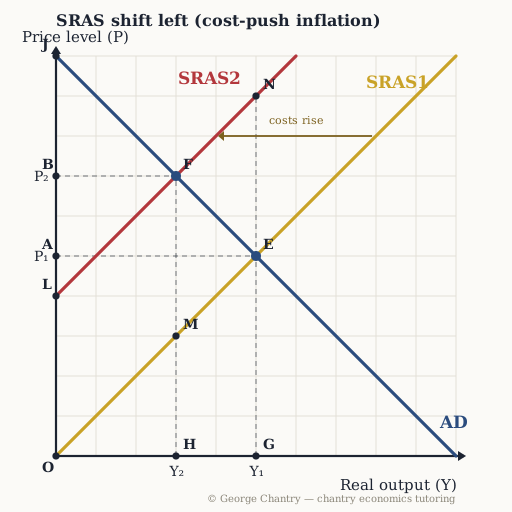
Cost-push arrives alongside a recession; demand-pull arrives alongside growth, and moderate demand-pull can even signal a healthy economy. Cost-push comes WITH a recession; demand-pull comes with growth. Moderate demand-pull around the 2% target is actively good for the economy. A leftward SRAS shift raises prices while cutting real GDP, so cost-push inflation comes alongside a recession rather than alongside growth. Demand-pull can even be read as a sign of healthy consumer optimism, and moderate demand-pull around the 2% target is actively good for growth. Diagnose which one you are looking at first — the two need very different treatment.
Test yourself properly
This is one of 6 questions on the sras shift left (cost-push inflation) diagram — every corner lettered, every wrong answer diagnosed.
▶ Play the sras shift left (cost-push inflation) game All questions & answers

George Chantry
Professional A-Level Economics tutor · Oxford PPE First, 3 prizes in economics · 7,000+ hours one-to-one