← A Level Economics Revision · All SRAS shift left (cost-push inflation) questions · Home
A-Level Economics · SRAS shift left (cost-push inflation) diagram question
The wage-price spiral: how does it feed cost-push inflation?
The diagram
The answer
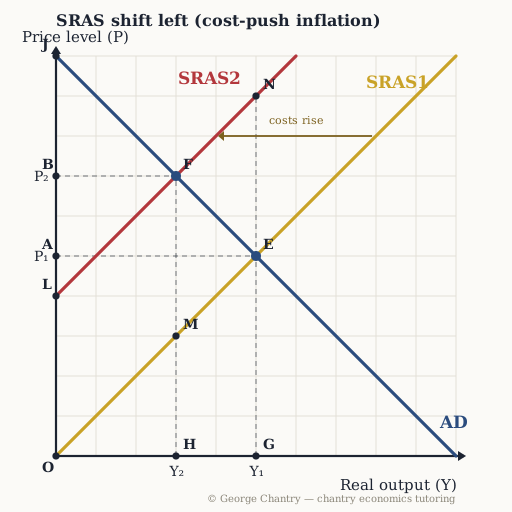
Workers demand higher wages to compensate for falling purchasing power; firms accept, costs rise, and firms pass those costs on as higher prices. Wages chase prices, prices chase wages. Once inflation is anticipated the loop becomes self-fulfilling and very hard to break. Once inflation is anticipated, workers demand higher wages to compensate for the falling purchasing power of their pay. If firms accept, their costs of production rise and they pass those costs on via higher prices — an uncontrollable wage-price spiral. Rational consumers also bring spending forward to lock in today's prices, adding demand-pull pressure on top.
Test yourself properly
This is one of 6 questions on the sras shift left (cost-push inflation) diagram — every corner lettered, every wrong answer diagnosed.
▶ Play the sras shift left (cost-push inflation) game All questions & answers

George Chantry
Professional A-Level Economics tutor · Oxford PPE First, 3 prizes in economics · 7,000+ hours one-to-one