← A Level Economics Revision · All J-curve questions · Home
A-Level Economics · J-curve diagram question
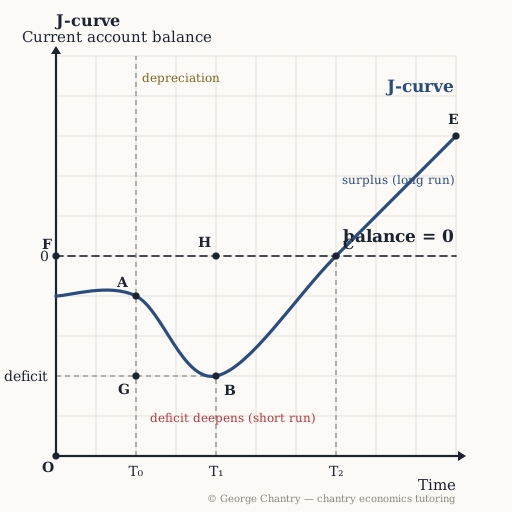
A depreciation is supposed to IMPROVE the current account. Why does the balance fall from A down to B first?
The diagram
The answer
In the short run demand for imports and exports is highly price-inelastic — contracts are already signed and substitutes take time to find. Prices move on day one; quantities don't. Dearer imports bought in the same volumes means import expenditure RISES — so the deficit deepens before it heals. In the short run Marshall-Lerner is rarely satisfied, because demand for imports and exports is highly price inelastic: existing contracts tie buyers to their suppliers, and firms and consumers take time to find substitutes once the rate has moved. So imports get dearer but are still bought, and cheaper exports don't yet sell many more. The balance falls from A to the trough at B before it starts to climb.
Test yourself properly
This is one of 6 questions on the j-curve diagram — every corner lettered, every wrong answer diagnosed.
▶ Play the j-curve game All questions & answers

George Chantry
Professional A-Level Economics tutor · Oxford PPE First, 3 prizes in economics · 7,000+ hours one-to-one