← A Level Economics Revision · All Currency appreciation (hot money) questions · Home
A-Level Economics · Currency appreciation (hot money) diagram question
EVALUATION: when you analyse an interest-rate rise, why link it to the EXCHANGE RATE before the inflation effect?
The diagram
The answer
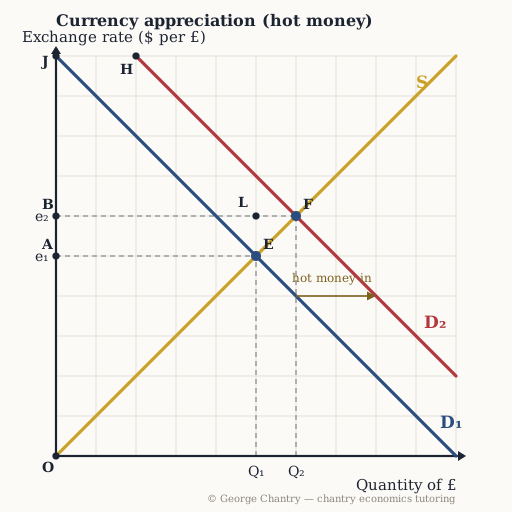
Financial markets are extremely efficient — the currency moves within minutes of the announcement, while demand-side policy takes about two years to move inflation. Anything running through the financial sector happens fast: whoever hears the news first profits by buying the pound first. Trump announces tariffs and the market is down three minutes later. Speed decides the ordering. A rate rise appreciates the currency almost immediately — the same day, even within minutes — whereas demand-side policy takes roughly two years to filter through to inflation. So over the first couple of years the currency effect dominates export prices, even though lower inflation eventually makes exports a little cheaper too. Saying that explicitly is an evaluation point, not a footnote.
Test yourself properly
This is one of 6 questions on the currency appreciation (hot money) diagram — every corner lettered, every wrong answer diagnosed.
▶ Play the currency appreciation (hot money) game All questions & answers

George Chantry
Professional A-Level Economics tutor · Oxford PPE First, 3 prizes in economics · 7,000+ hours one-to-one