← A Level Economics Revision · All Currency appreciation (hot money) questions · Home
A-Level Economics · Currency appreciation (hot money) diagram question
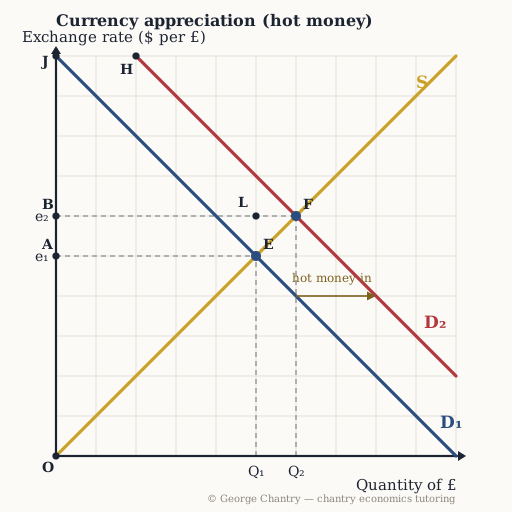
What shifts the DEMAND for pounds right from D₁ to D₂?
The diagram
The answer
A rise in UK interest rates relative to the rest of the world — savers must BUY pounds to save in a London bank. London banks won't take a euro deposit. To earn the higher UK rate you must sell your own currency and BUY pounds — that buying is the hot money inflow, D₁ to D₂. Hot money is money that moves fast to the best return. If the UK offers rates you can't get elsewhere, Britain becomes the place to save — but to save there you need pounds, so international savers sell euros or yen and buy sterling. On £100,000, 5% pays £5,000 a year against £1,000 at 1%: £4,000 more just for moving it, and the only way to get it is to buy pounds. Demand shifts right, the pound appreciates.
Test yourself properly
This is one of 6 questions on the currency appreciation (hot money) diagram — every corner lettered, every wrong answer diagnosed.
▶ Play the currency appreciation (hot money) game All questions & answers

George Chantry
Professional A-Level Economics tutor · Oxford PPE First, 3 prizes in economics · 7,000+ hours one-to-one